About · Jeffersontown, KY
Commercial Roofing Company in Jeffersontown
Plain Answers on What Your Roof Needs Before Any Work Starts
As a commercial roofing company in Jeffersontown, we replace and repair low-slope and metal roofs on warehouses, offices, plants, churches, and retail buildings.
How a Commercial Roofing Company in Jeffersontown Should Start
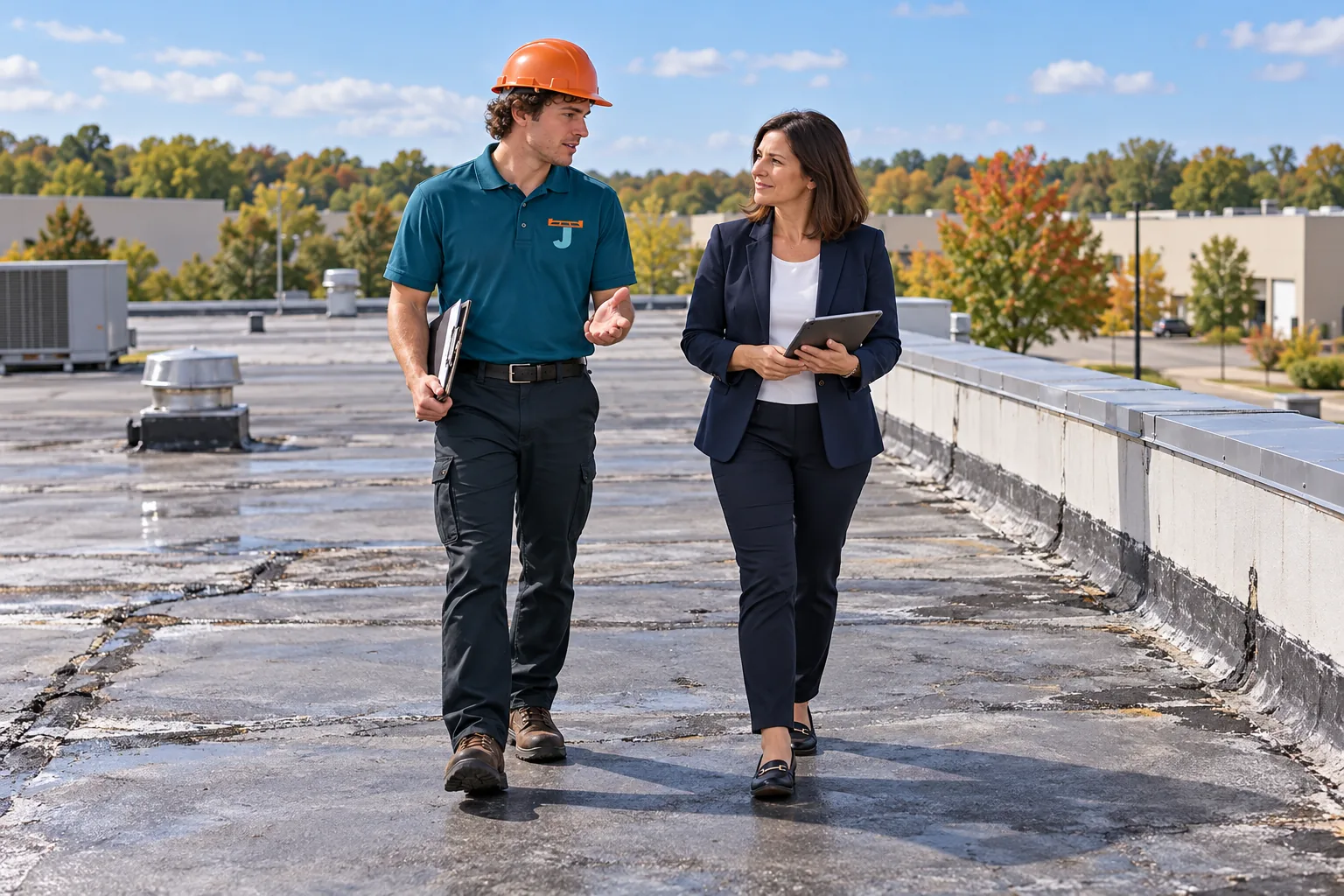
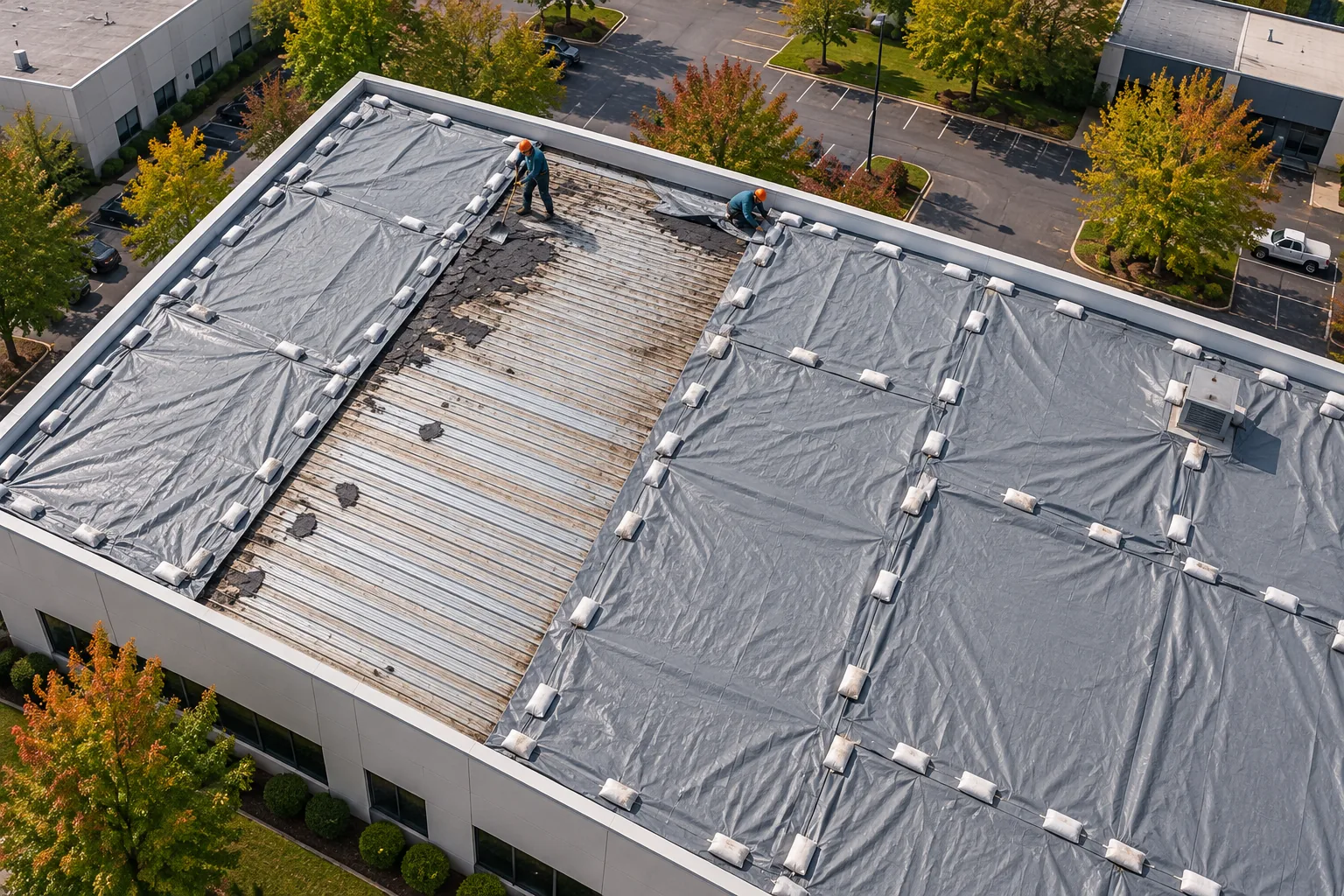
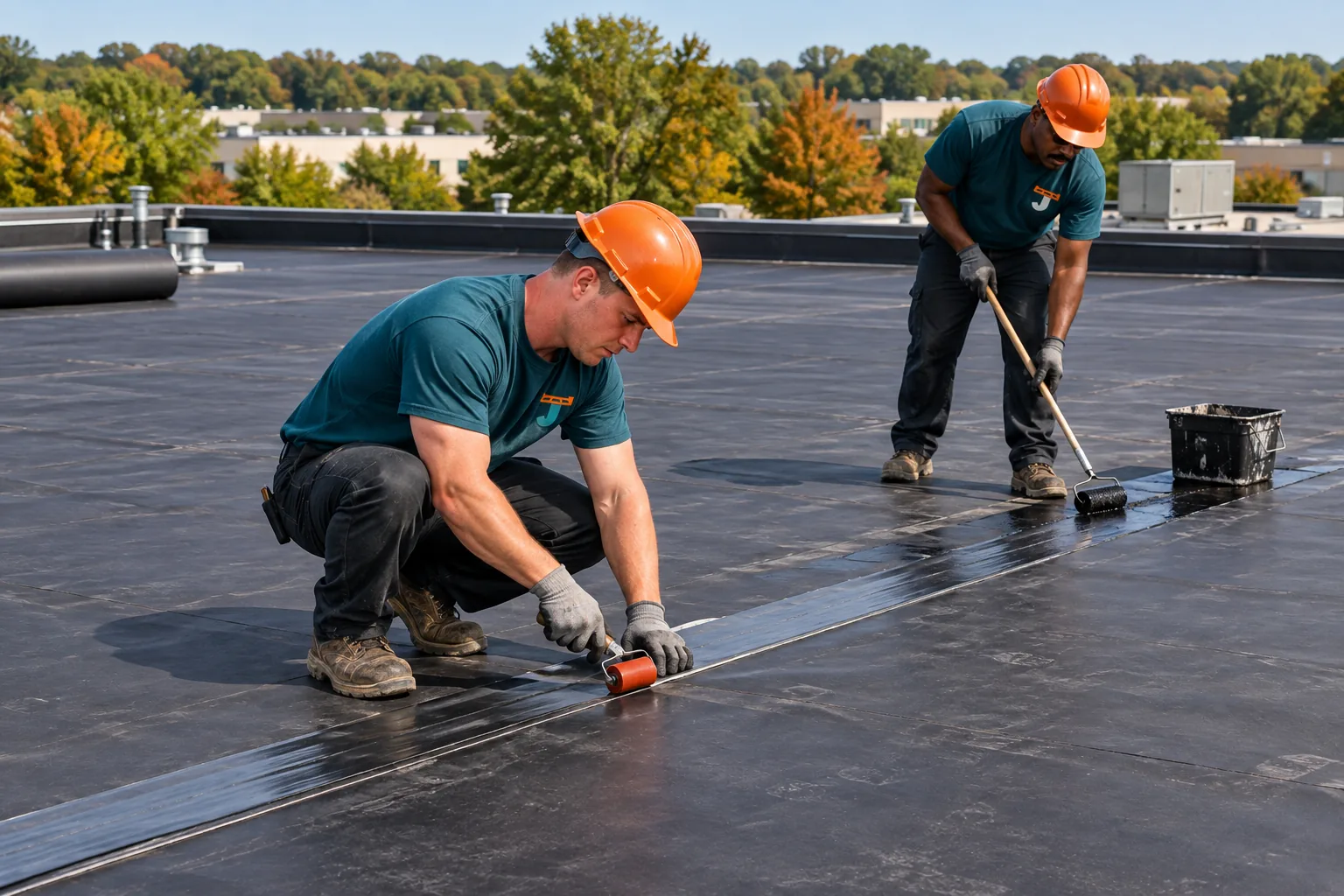
Any commercial roofing company in Jeffersontown should start the same way, on the roof and before a price. We walk it, photograph the problem areas, and cut cores where replacement is possible, because layers and moisture stay hidden until the roof is opened.
From there the scope is written in plain terms, so you can compare it line by line with any other bid.
- Repair, recover, or tear-off, with the reason
- Membrane or panel, thickness, and insulation
- What happens at each curb, wall, and edge
- The permit office for your parcel
Buildings We Work On
Commercial and industrial roofs only. These building types account for most of the roofs we walk.
Warehouses
Wide steel-deck roofs with long seam runs, where mechanically attached TPO and walkway pads to each unit fit the traffic and the wind exposure.
Retail and Strip Centers
Flat roofs behind parapets, often with metal mansards out front and kitchen exhaust fans on restaurant tenants, all scoped as separate roof areas.
Office Buildings
Low-slope main roofs with rooftop units, canopies, and coping that may need raising once code-required insulation goes on.
Churches and Schools
Single roofs with parapets and through-wall scuppers, where work is scheduled around services and the state keeps permit review for schools.
Plants
Large roofs with process vents, dust collectors, and conduit runs, replaced section by section while production continues below.
Shops and Farm Buildings
R-panel and standing seam steel on shops, barns, and storage buildings, where screw rows, ridge caps, and eave trim do most of the leaking.
Planning a Roof Replacement Next Year?
An inspection now gives you core results, a written scope, and a number to budget around. Ask while the roof is dry and easy to walk.
Commercial Roofing Checks We Run on Every Jeffersontown Roof
The inspection checklist, in the order it runs on the roof.
- Roof access: hatch, ladder, or lift, and the path to it
- Field membrane or panels: seams, laps, blisters, and shrinkage
- Drains and scuppers: bowls, clamping rings, strainers, and overflows
- Curbs and penetrations: flashing heights, pipe boots, and pitch pans
- Parapets and edges: coping cleats, base flashing, and gutters
- Ponding: water lines, dirt rings, and low spots between drains
- Core cuts where replacement is possible: layers, boards, moisture, deck
- Inside the building: ceiling stains matched to the roof above them
What We Do and What We Will Not Do
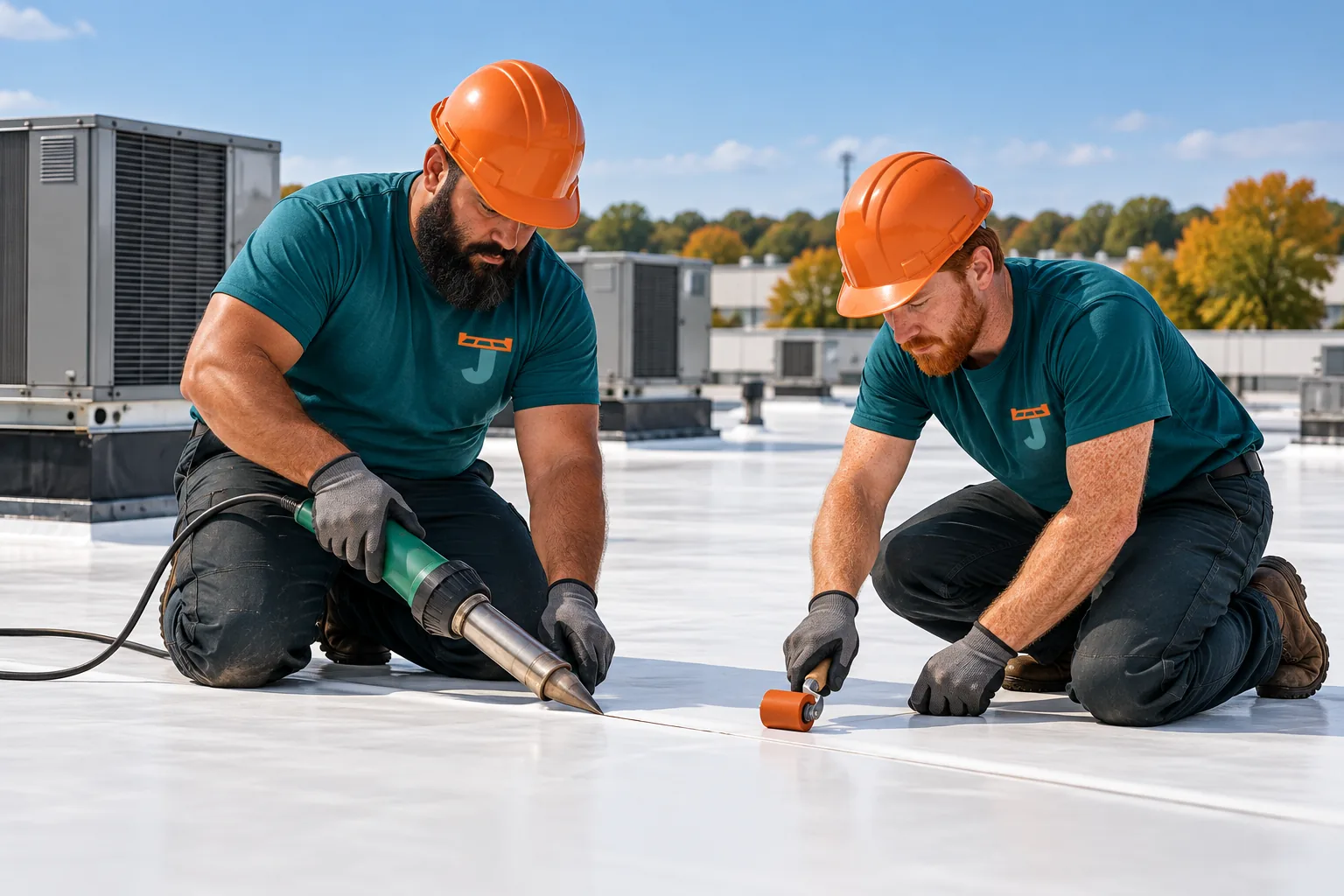
Two short lists that describe how every job is handled, from the first roof walk to the final seam check.
On Every Job
- Inspection
- Before any price
- Core cuts
- Where replacement is possible
- Scope
- Written in plain terms
- Open sections
- Dried in each evening
- Records
- Photos, products, permit number
What We Will Not Do
- Roof over wet boards
- Wet insulation comes out first
- Stack a third roof
- Code limits recovers
- Skip the permit
- Office confirmed by parcel
- Guess at curb heights
- Measured before tear-off
- Quote unseen
- Every price follows a roof walk
Commercial Roofing Questions We Answer for Jeffersontown Owners
Code, weather, utility, and inspection questions that shape a replacement before the first sheet goes down.
Most Asked
What should I gather before a commercial roof inspection in Jeffersontown?
Bring the roof's age, the number of layers if you know it, and every leak location from the past few years. Original drawings or a sketch of drains and units, photos of ceiling stains, service contacts for the units, past repair dates and materials, and access details for the hatch or ladder all point the inspection to the right spots.
Which building code applies to a commercial roof replacement in Jeffersontown?
The Kentucky Building Code. The state's currently enforced code list names the 2018 Kentucky Building Code, based on the 2015 IBC, with the 2012 IECC for commercial energy. On a tear-off, ask the plans reviewer how much insulation the new assembly must carry, since that sets curb and parapet flashing heights.
How does Louisville-area rain and snow affect a new roof installation?
Rain sets the pace. NWS Louisville's 1991 to 2020 normals show about 48 inches of precipitation a year, with May the wettest month, and about 13 inches of snow in an average season. Crews open only what they can close by evening, seal each day's edge to the old roof, and watch adhesive limits on cold mornings.
Do LG&E and KU offer business incentives tied to roof insulation?
Their business rebate programs count insulation as an eligible improvement under the custom track, so a replacement that adds insulation over the deck would go through custom review. Call the utility with the account number, describe the insulation planned, ask about rooftop unit upgrades, and get eligibility confirmed in writing before work starts. Gas-only customers are excluded.
Who inspects rooftop unit work during a Jeffersontown roof replacement?
The city does. Jeffersontown handles its own commercial HVAC inspections, and Louisville Metro's HVAC listing excludes it, per the state's Jefferson County contact sheet. The roofing crew rebuilds the curb flashing and membrane, the mechanical contractor handles the disconnect, adapter, and reset, and the inspection gets booked with the crane day.
Call a Commercial Roofing Company in Jeffersontown
Tell us about the roof and the building under it, and we will set up the walk and the core cuts.