Industrial Roofing · Jeffersontown, KY
Jeffersontown Industrial Roofing Contractor
Plan Around Exhaust Fans, Process Vents, and Long Drain Runs
As a Jeffersontown industrial roofing contractor, we replace plant, warehouse, and distribution roofs in phases while production continues below.
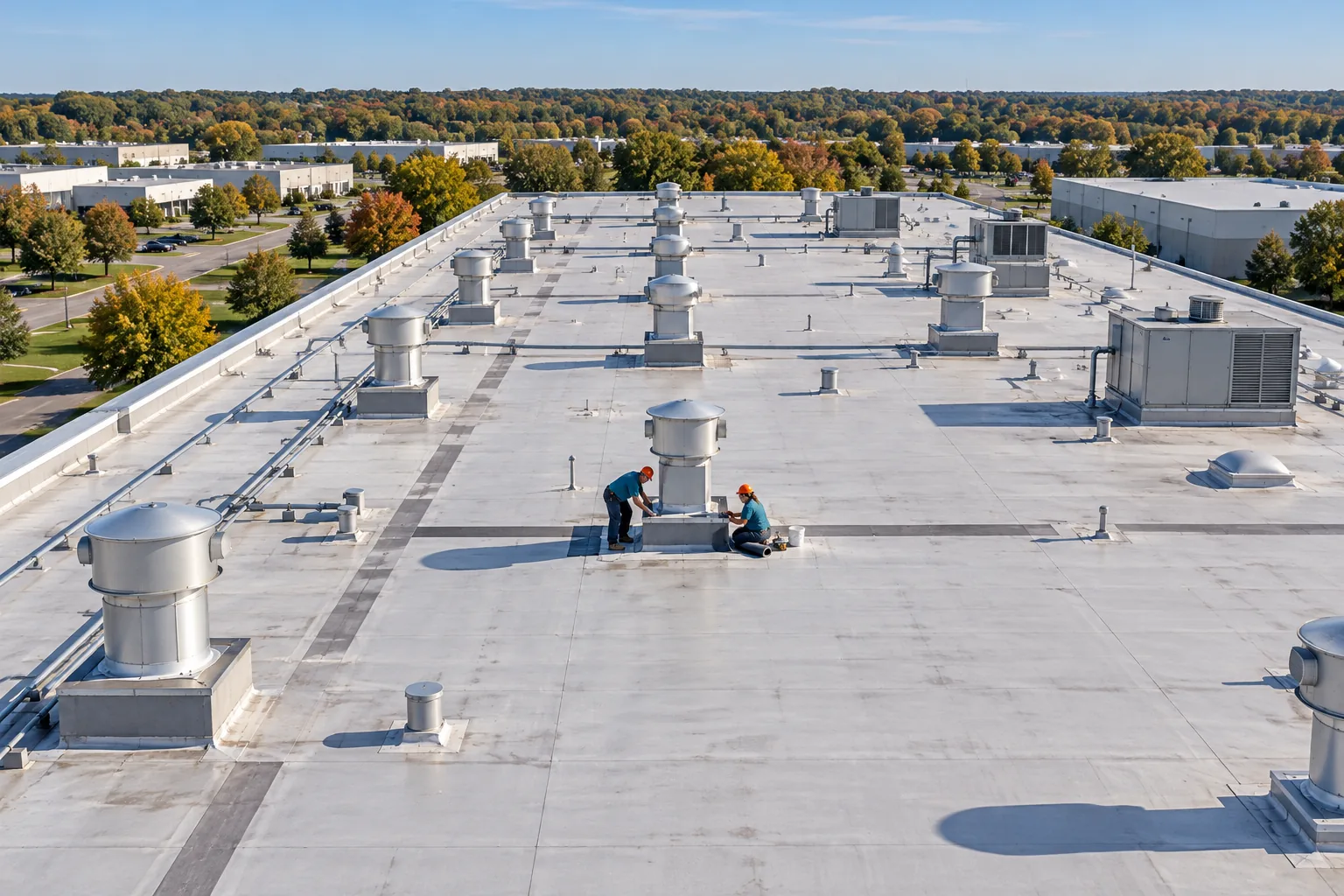
- Daily dry-in over production
- Membrane matched to exhaust
- Drains planned roof-wide
- Walkway pads to every unit
Membrane or Metal on a Plant Roof?
A Jeffersontown industrial roofing contractor weighs slope, rooftop equipment, and what comes out of the fans before picking a system.
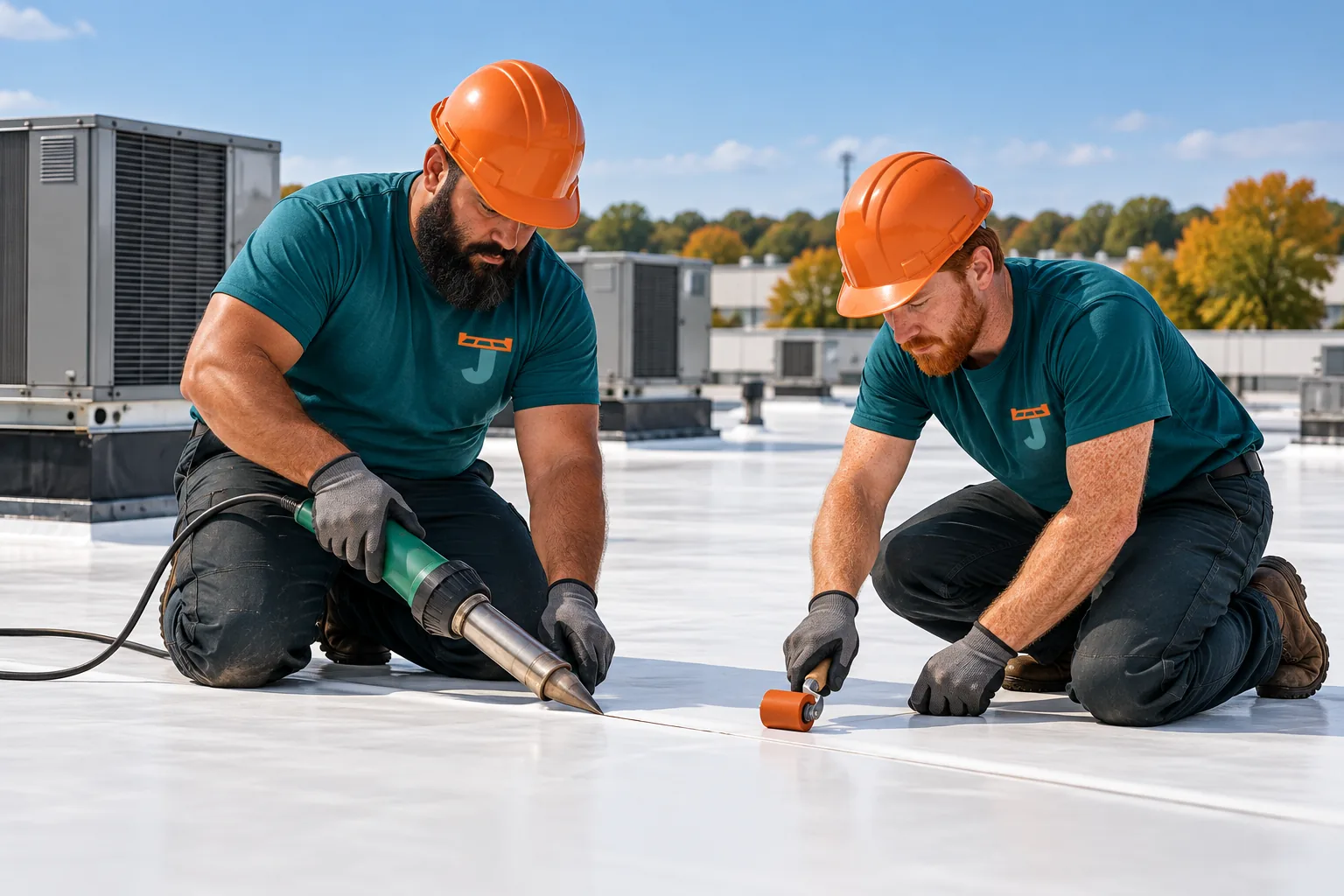
Single-Ply Membrane
- Slope
- Low-slope plant roofs
- Equipment
- Many curbs and supports
- Exhaust
- Grease-rated sheet where needed
- Traffic
- Walkway pads on routes
- Drainage
- Tapered boards to drains
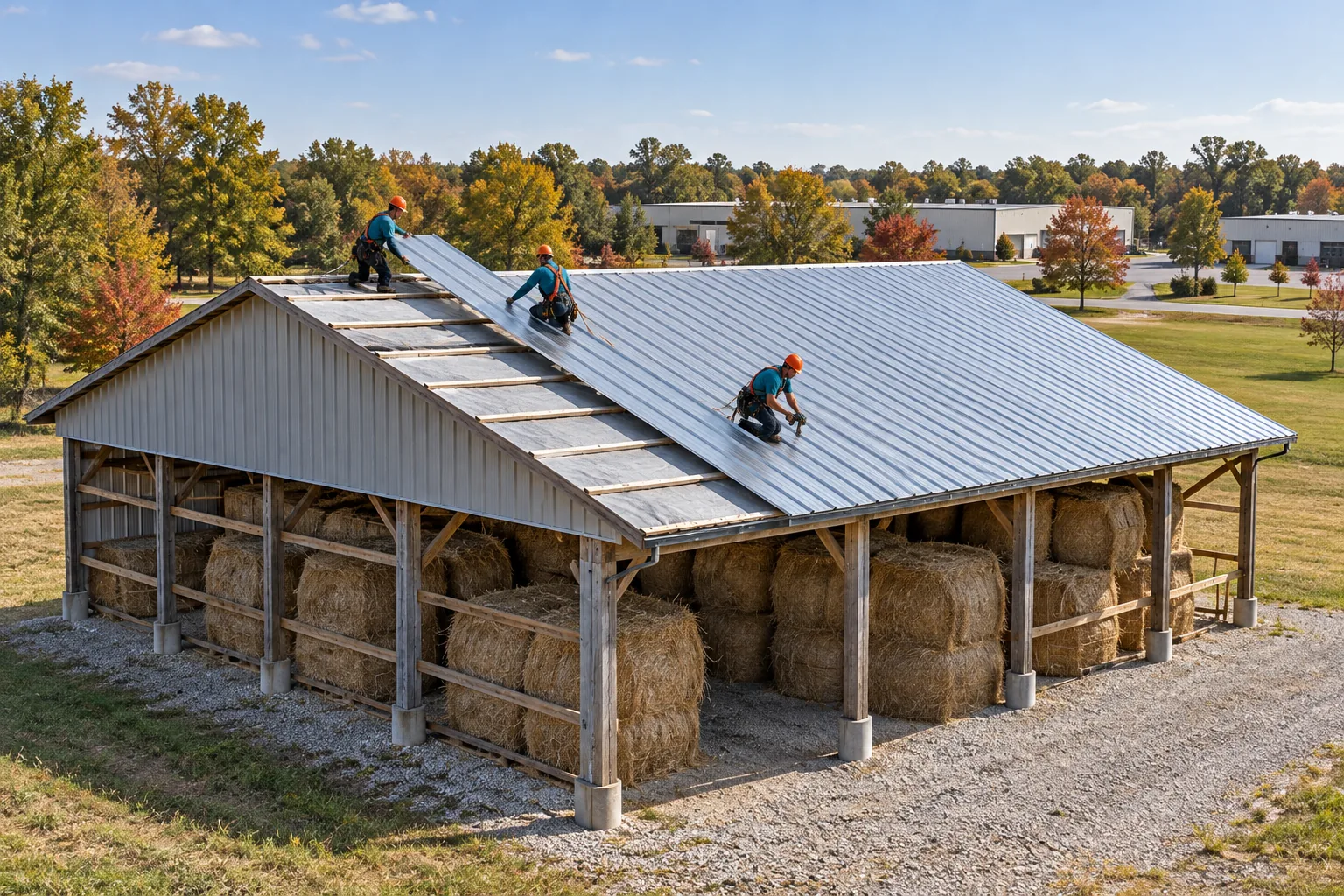
Metal Panel
- Slope
- Pitched steel frames
- Equipment
- Fewer, framed openings
- Exhaust
- Curbs with diverters
- Traffic
- Panels need set routes
- Drainage
- Eaves and gutters
What Wears Out Plant Roofs
Industrial roofs fail where equipment, discharge, and service traffic meet the membrane.
Residue at Exhaust Fans
Grease, oils, solvents, and fine dust collect around fan curbs and soften or stain some sheets. Residue pools after rain, so short curbs sit in it.
Service Paths
Each trip to a rooftop unit adds wear in the same narrow path across the membrane, and dropped tools puncture thinner sheets along it.
Too Few Drains
Wide roofs with few drains pond, and the code's secondary drainage needs overflow drains or scuppers.
Open Skylights
Skylights in the field of the roof need screens or guards, and their curbs leak when flashing is short.
Process Steam
Steam from process vents needs raised curbs and taller flashing to keep moisture off the seams.
Conduit and Gas Lines
Lines laid on the sheet chafe it, so equipment supports with flashing lift them off the membrane.
Industrial Roofing Options for Jeffersontown
Plant roofs get options sized to their equipment, their exhaust, and their schedules.
Grease-Rated Sheet
PVC or a grease-rated membrane, plus a catch box at the fan, where cooking or process oil lands on the roof.
Walkway Pad Network
Pads along every service path to rooftop units, so traffic stays off the welded laps.
Overflow Drainage
Overflow drains or scuppers through the parapet, sized with tapered insulation and crickets across the whole roof.
Phased Sections
Sections opened only as far as the crew can close by evening, scheduled around production and dock traffic.
Benefits of a New Industrial Roof
What a planned plant roof replacement does for the operation under it.
Production Continues
Daily dry-in keeps stock and equipment dry under open sections.
Sheet Matched to Discharge
The membrane stands up to what the fans and vents put on it.
Roof-Wide Drainage
Drains, crickets, and overflows planned together across every section.
Safer Rooftop Access
Hatch rails, skylight guards, and walkway pads added while the roof is open.
Insulation to Code
A tear-off brings insulation over the deck up to the energy code.
Taller Steam Curbs
Raised curbs keep process steam and residue above the flashing line.
Supported Lines
Conduit and gas lines ride on flashed supports instead of the membrane.
Section Records
Each phase gets its own photos and core results in the roof file.
Plant Shutdown Coming Up?
A planned shutdown is a good window for crane days and curb work. Ask for an inspection now so the roof plan is ready in time.
Trusted Industrial Roofing for Jeffersontown Plants
Five stages that keep the plant running while its roof is replaced.
Inspect Your Roof
We map every fan, vent, dust collector, conduit run, and drain, and cut cores across the roof. Discharge around each fan is checked against the membrane it will sit on.
Coordinate With the Facility
Air intake and exhaust shutdowns, dust control over clean areas, crane days, unit disconnects, and staging clear of dock doors all go on one schedule.
Phase the Tear-Off
Each day the crew opens only the deck it can dry in by evening. Steel deck replacement under failed sections is planned separately.
Install and Flash
Insulation, tapered boards, and membrane go down section by section, with curbs raised for steam and fans, and equipment supports flashed in.
Protect the New Roof
Walkway pads, skylight guards, and the roof hatch rail go on before the job closes, so service traffic starts on the right paths.
Related Roof Systems
Plant roofs often combine these services across different sections of one building.
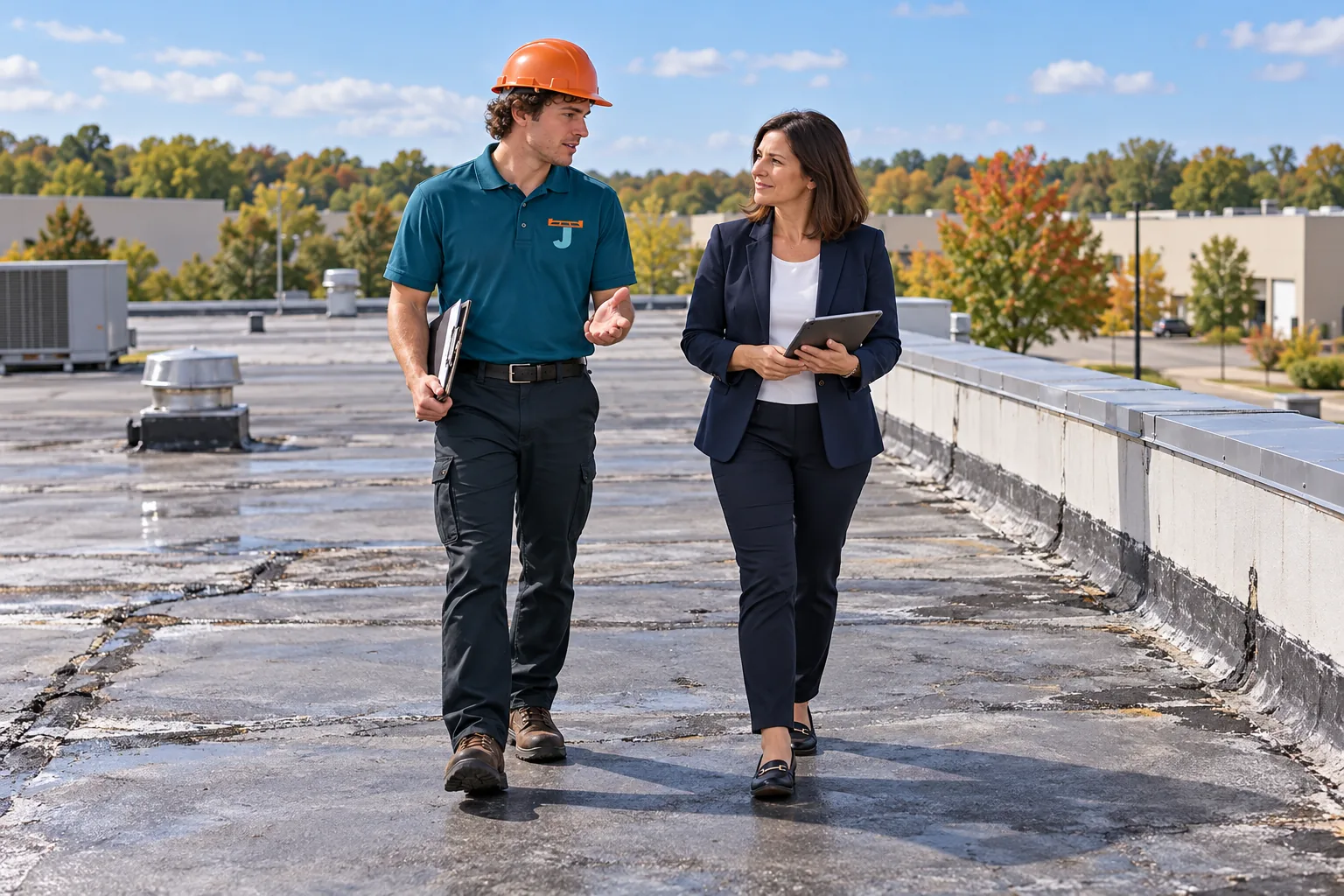
Commercial Roof Repair
Fixes at fan curbs and drains while a full replacement is budgeted.
Commercial roof repair in Jeffersontown →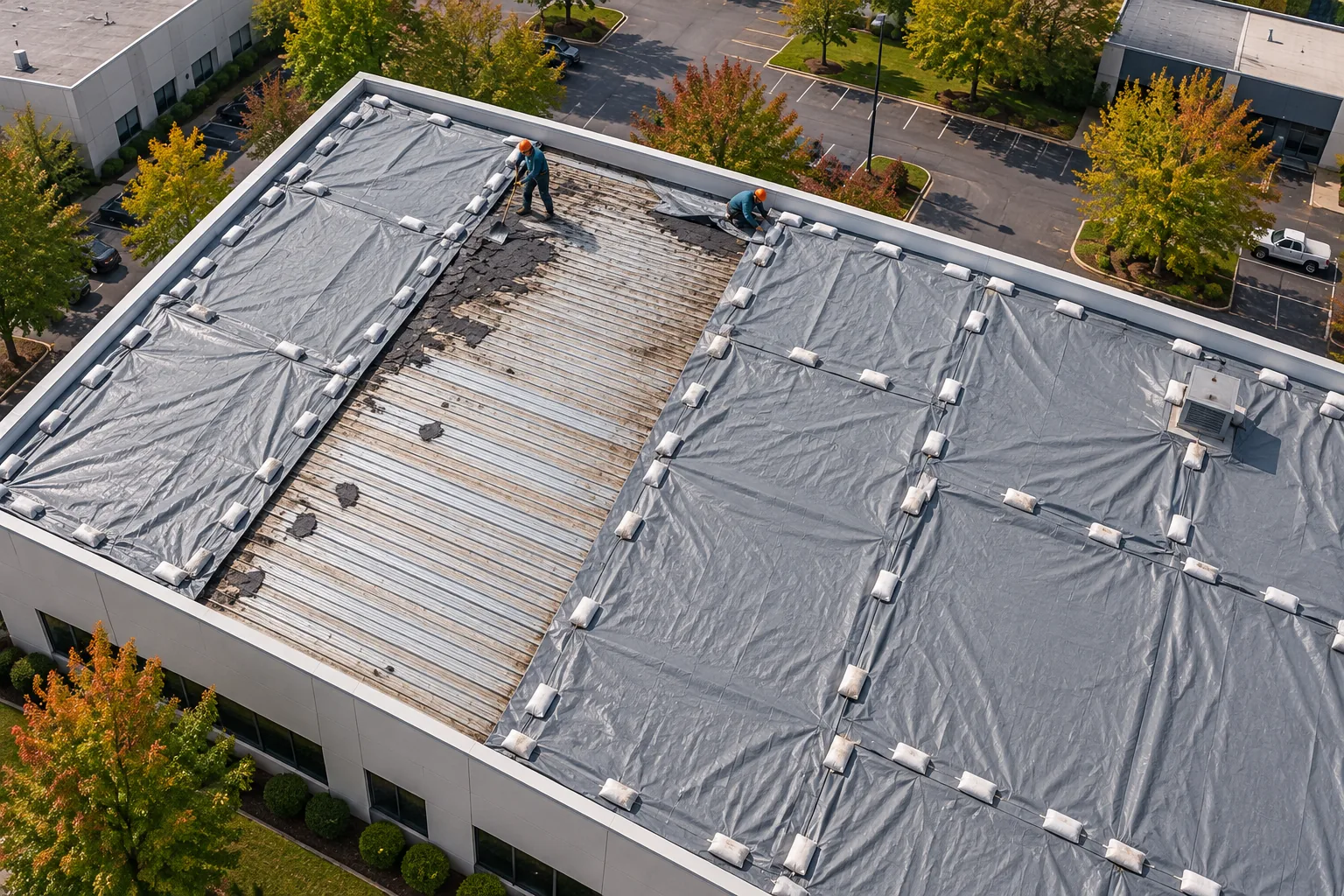
Flat Roofing
Low-slope rebuilds with tapered insulation over large, flat plant sections.
Flat roofing in Jeffersontown →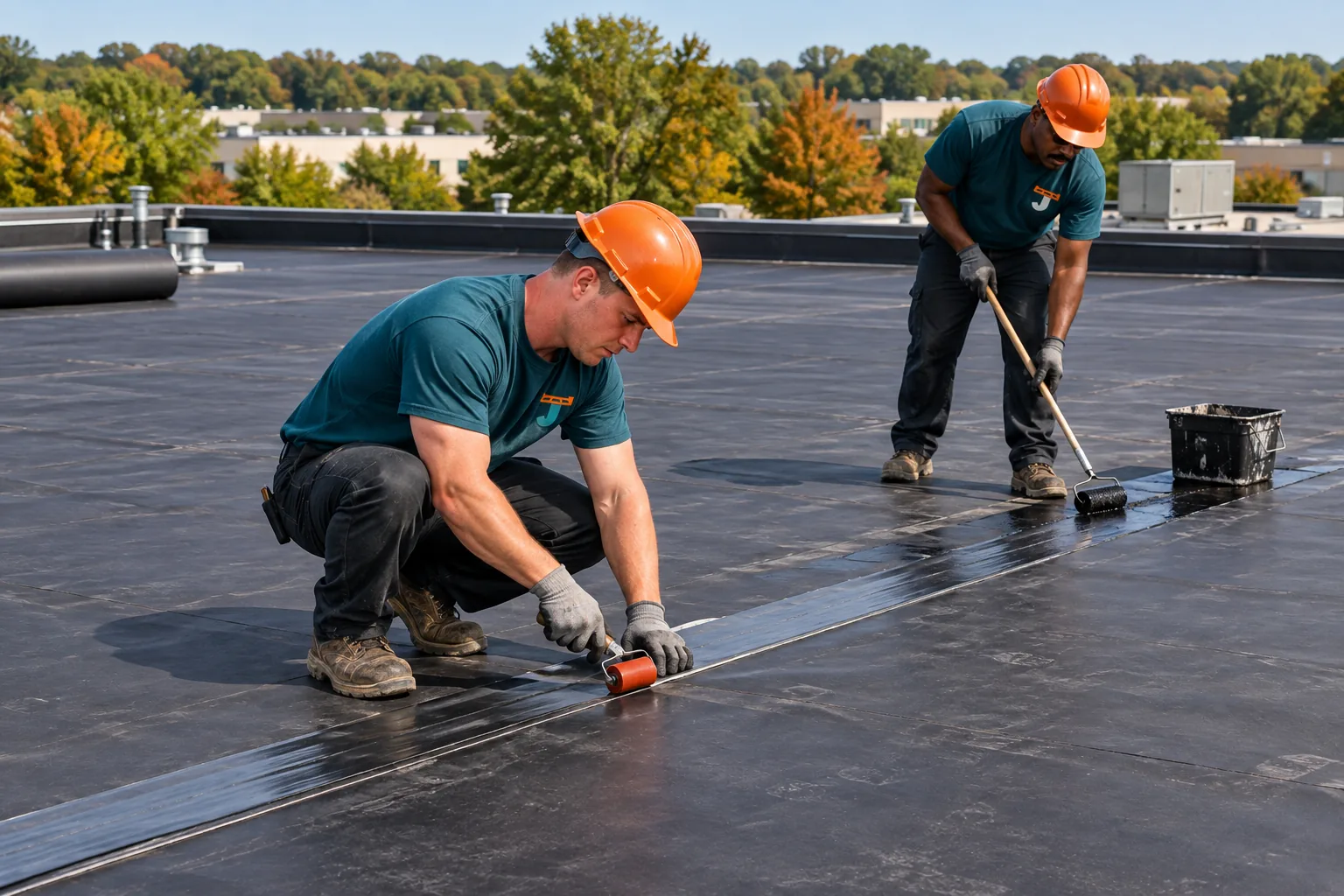
EPDM Roofing
Wide rubber sheets on broad warehouse sections with few penetrations.
EPDM roofing in Jeffersontown →Plant Roof Questions for a Jeffersontown Industrial Roofing Contractor
Answers on operations, exhaust, drainage, and safety for industrial roofs.
Most Asked
Can a plant keep running during a roof replacement?
Most do. Industrial roof replacement while a plant operates works because crews open only as much roof each day as they can close before evening. Air intakes near the work shut down, dust is controlled over clean areas, and staging stays clear of dock doors and truck lanes.
How is industrial roofing different from other commercial roofing?
Plants and distribution buildings bring large roof areas, heavy rooftop equipment, and steady operations inside. Exhaust fans, process vents, dust collectors, and conduit runs set the membrane layout, walkway pads, and membrane choice, and long runs of edge metal and many drains get more planning.
How do exhaust fans and process vents affect the roof membrane?
Roof membrane choice near exhaust fans and process vents follows the discharge. Grease or oil calls for PVC or a grease-rated sheet with a catch box, steam calls for raised curbs, dust calls for pads and washing near drains, and chemical vapor needs a compatibility check with the manufacturer.
How are roof drains and overflow scuppers planned on industrial roofs?
From the drains backward. Tapered insulation and crickets move water off every section, and the building code requires secondary drainage, built as overflow drains or overflow scuppers through the parapet. Drain bowls, clamping rings, strainers, and downspouts get checked on every replacement.
Where do walkway pads go on an industrial roof?
Walkway pads for industrial roofs run along every service path to rooftop units, since each trip adds wear to the same narrow strip. Skylight screens, a roof hatch with rails, and flashed equipment supports go in at the same time, while the membrane is already open.
Can steel deck be replaced during the reroof?
Yes, but it is planned separately, because replacing deck opens the building to the space underneath. Core cuts and the tear-off show which bays have rust or soft spots, and those sections are scheduled around what sits below them.
What happens on crane days at a plant?
Insulation, membrane rolls, and new curbs go up to the roof by crane or hoist, so those days are set with the facility team. Staging stays clear of dock doors and truck lanes, nearby air intakes shut down while loads swing overhead, and the mechanical trade handles any unit lifts.
Meet a Jeffersontown Industrial Roofing Contractor on Your Roof
Tell us what runs under the roof and what sits on top of it. We will build the phasing plan around both.