Roof Systems · Jeffersontown, KY
Commercial Roofing Services in Jeffersontown
Extend Your Roof's Life With a System Matched to Its Slope
We provide commercial roofing services in Jeffersontown for low-slope and metal roofs: repairs, TPO and EPDM membranes, flat roof replacement, plant roofs, and steel panels.
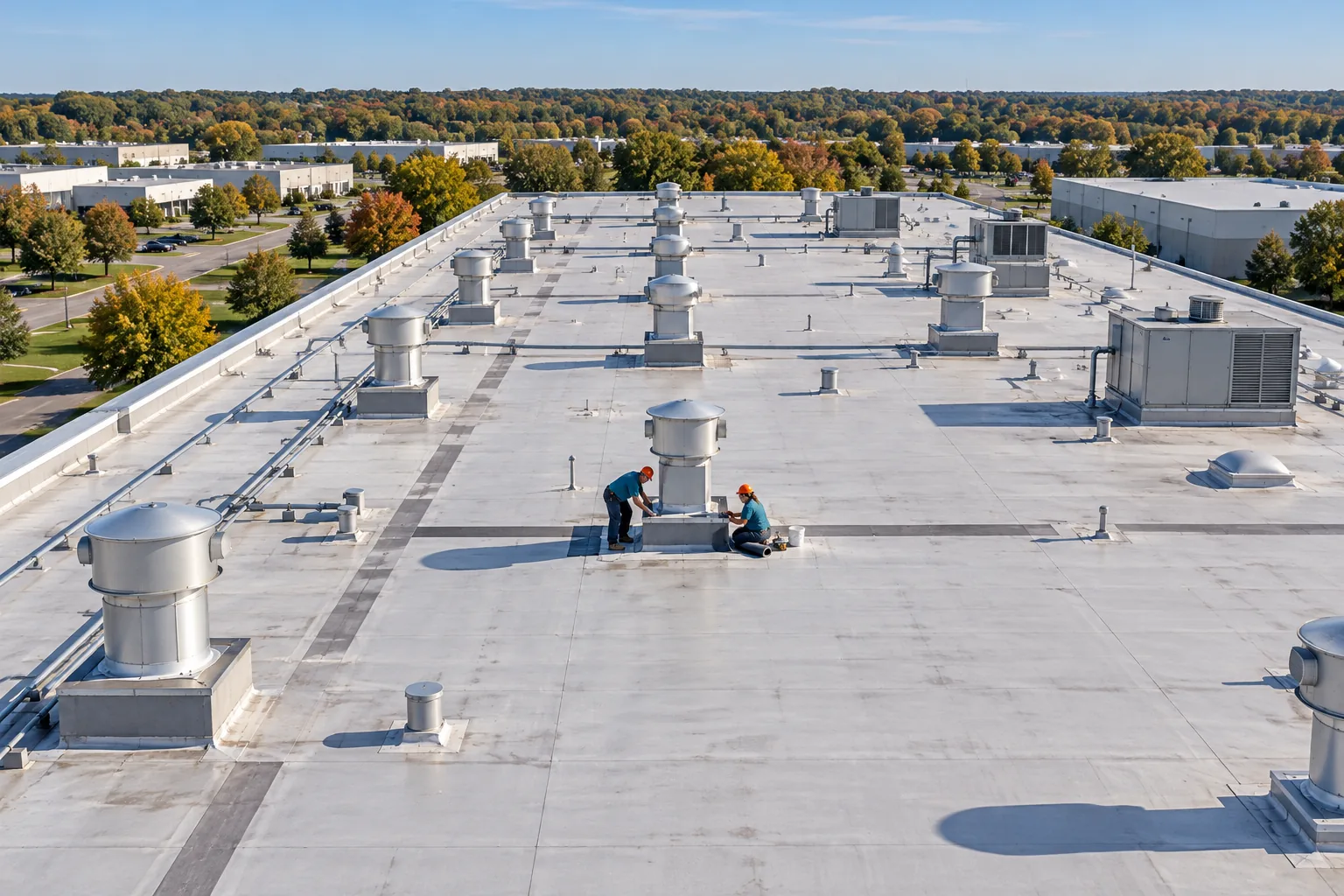
Six Commercial Roofing Services in Jeffersontown
Each of these commercial roofing services in Jeffersontown starts with the same roof walk and core cuts, then splits by roof slope, deck type, and how the building is used.
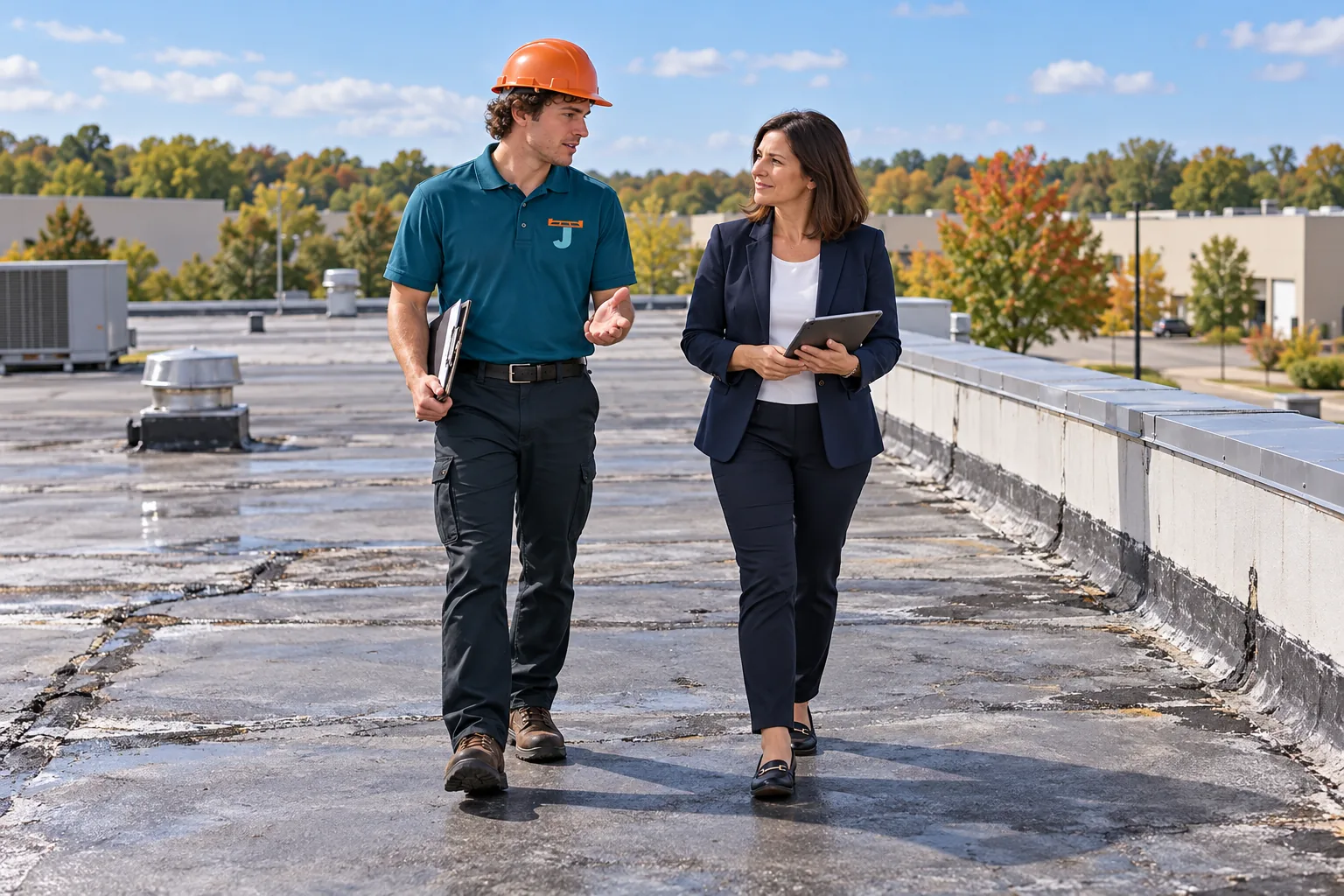
Commercial Roof Repair
Fixes for split laps, leaking curbs, cracked drain bowls, and loose panel screws, when the damage stays in a few spots and the insulation around it is dry.
Commercial roof repair details →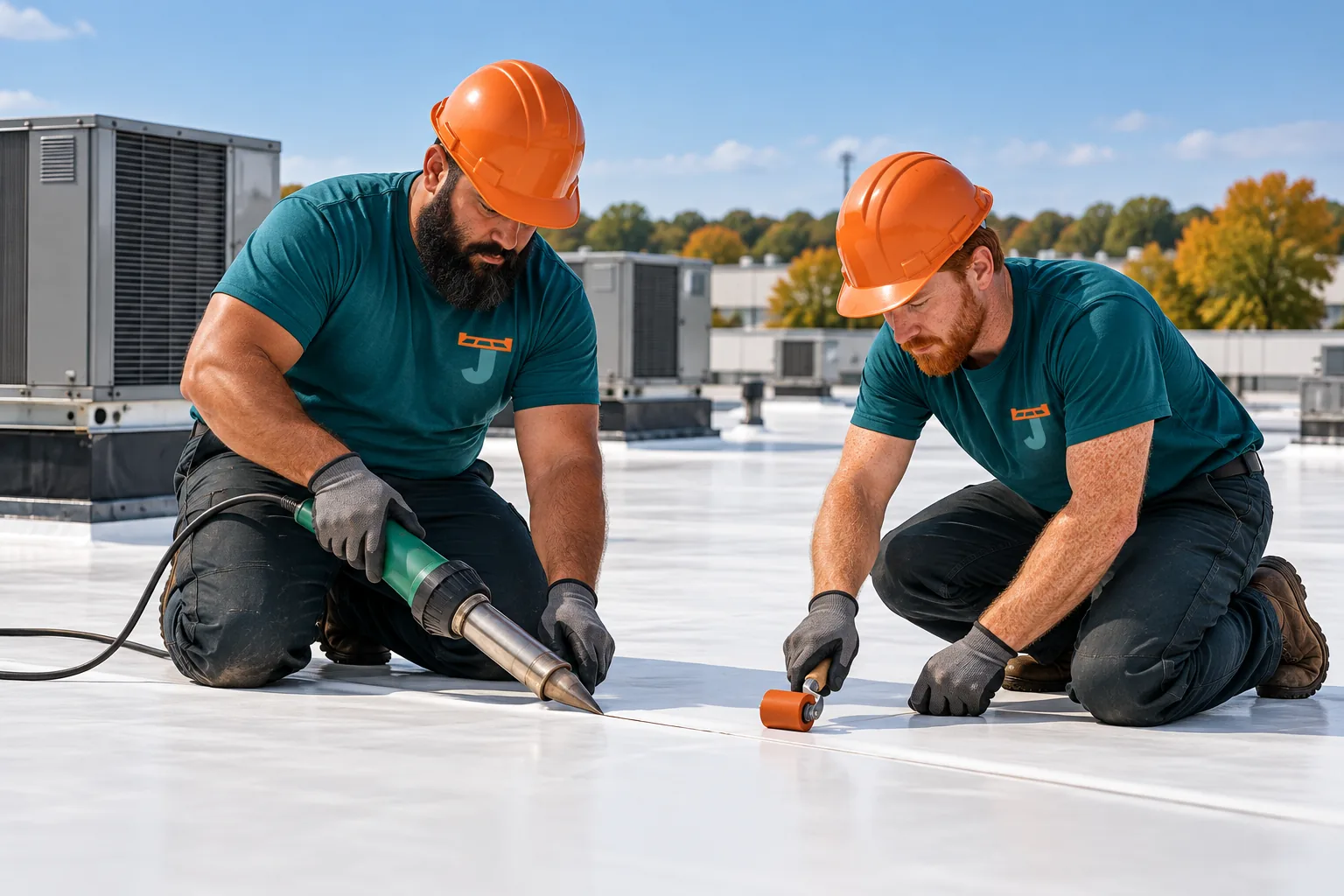
TPO Roofing
A white, heat-welded single-ply roof for warehouses, offices, and retail, mechanically attached, fully adhered, or induction welded to suit the deck and wind exposure.
TPO roofing details →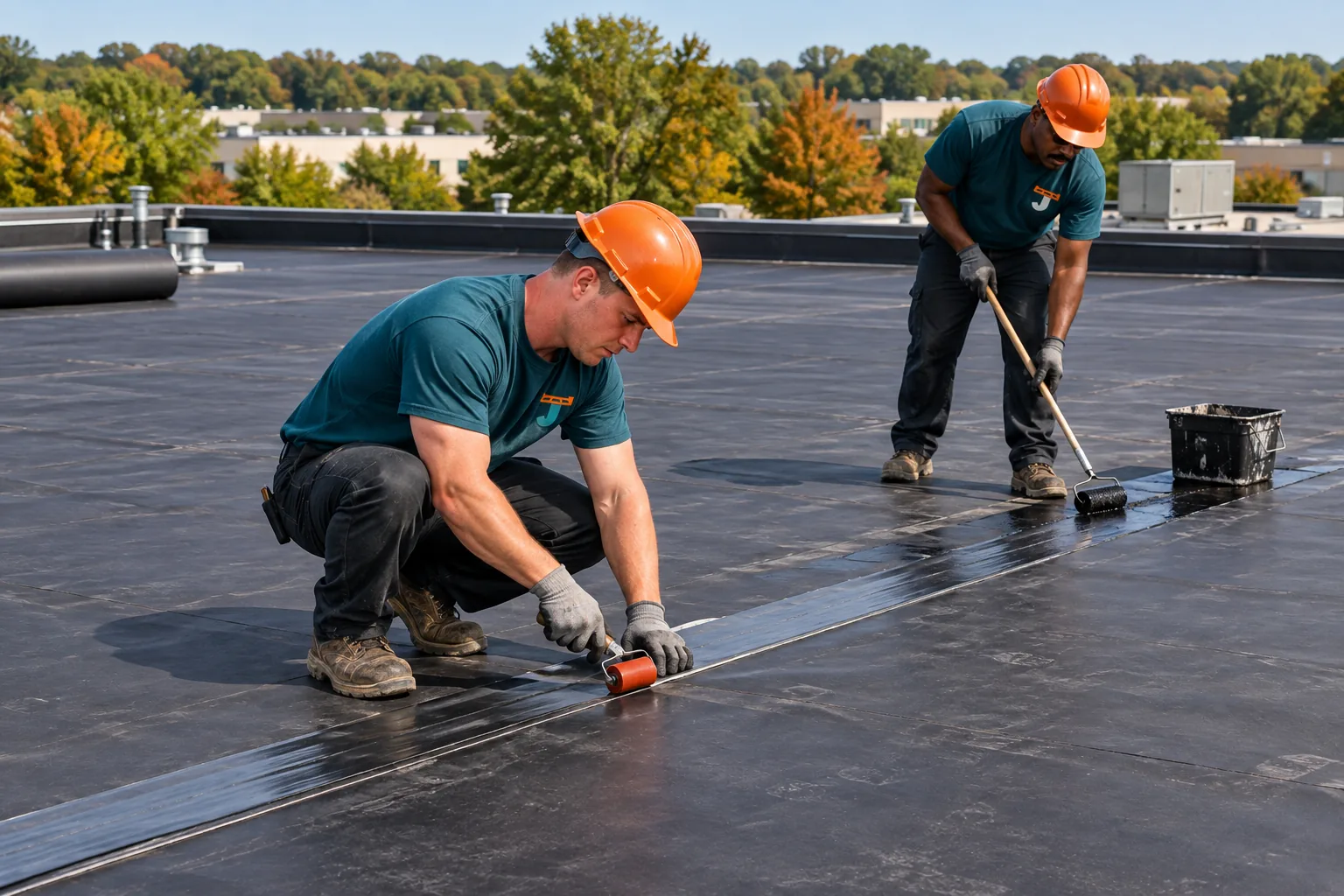
EPDM Roofing
Black or white rubber membrane in wide sheets, joined with primer and seam tape, for broad flat roofs, additions, and unconditioned storage space.
EPDM roofing details →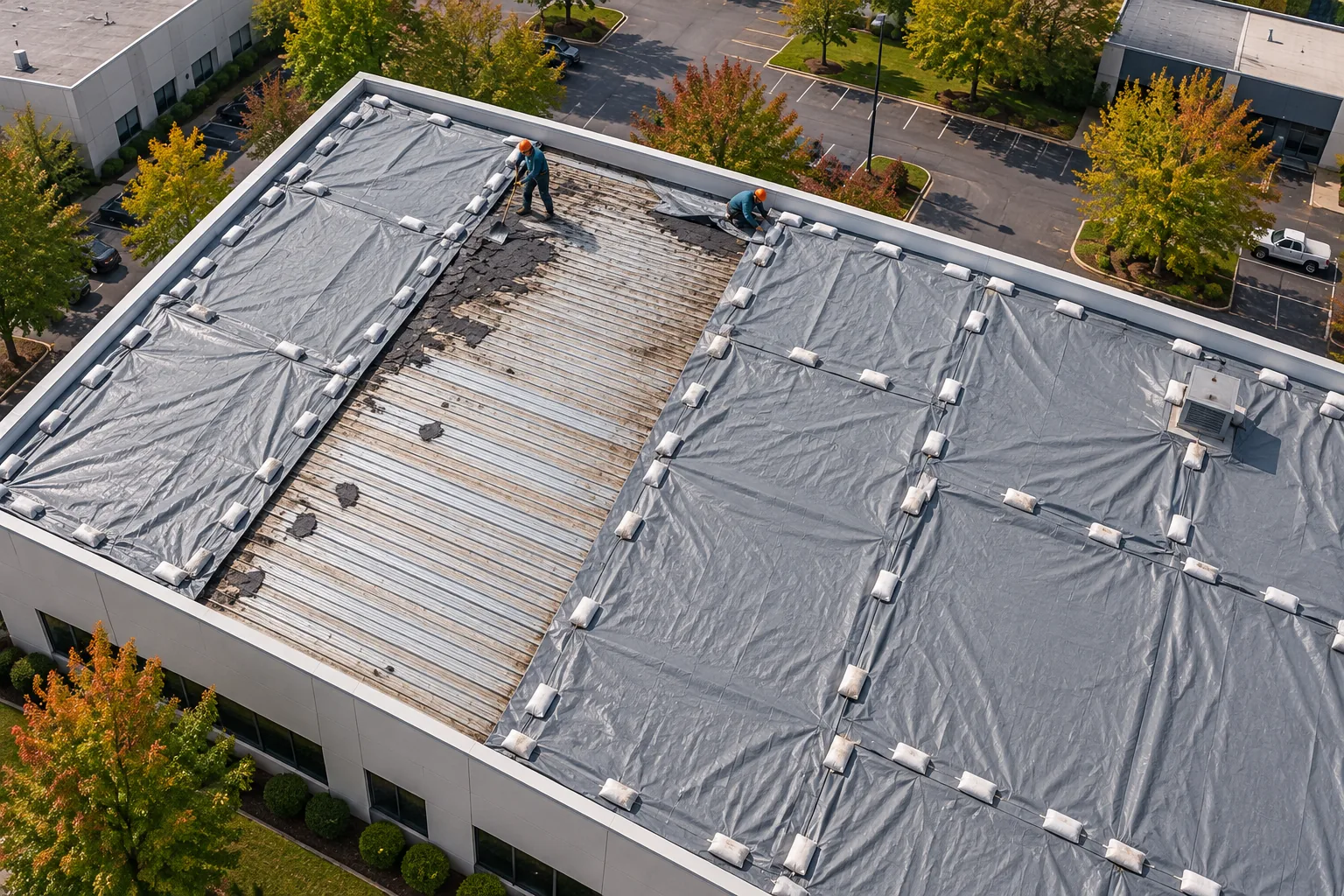
Flat Roofing
Full low-slope replacement, tear-off or recover, with tapered insulation, cover board, new membrane, and edge metal, including older built-up and mod bit roofs.
Flat roofing details →Industrial Roofing
Plant and distribution roofs planned around exhaust fans, process vents, crane days, and production schedules, with daily dry-in so the floor below keeps working.
Industrial roofing details →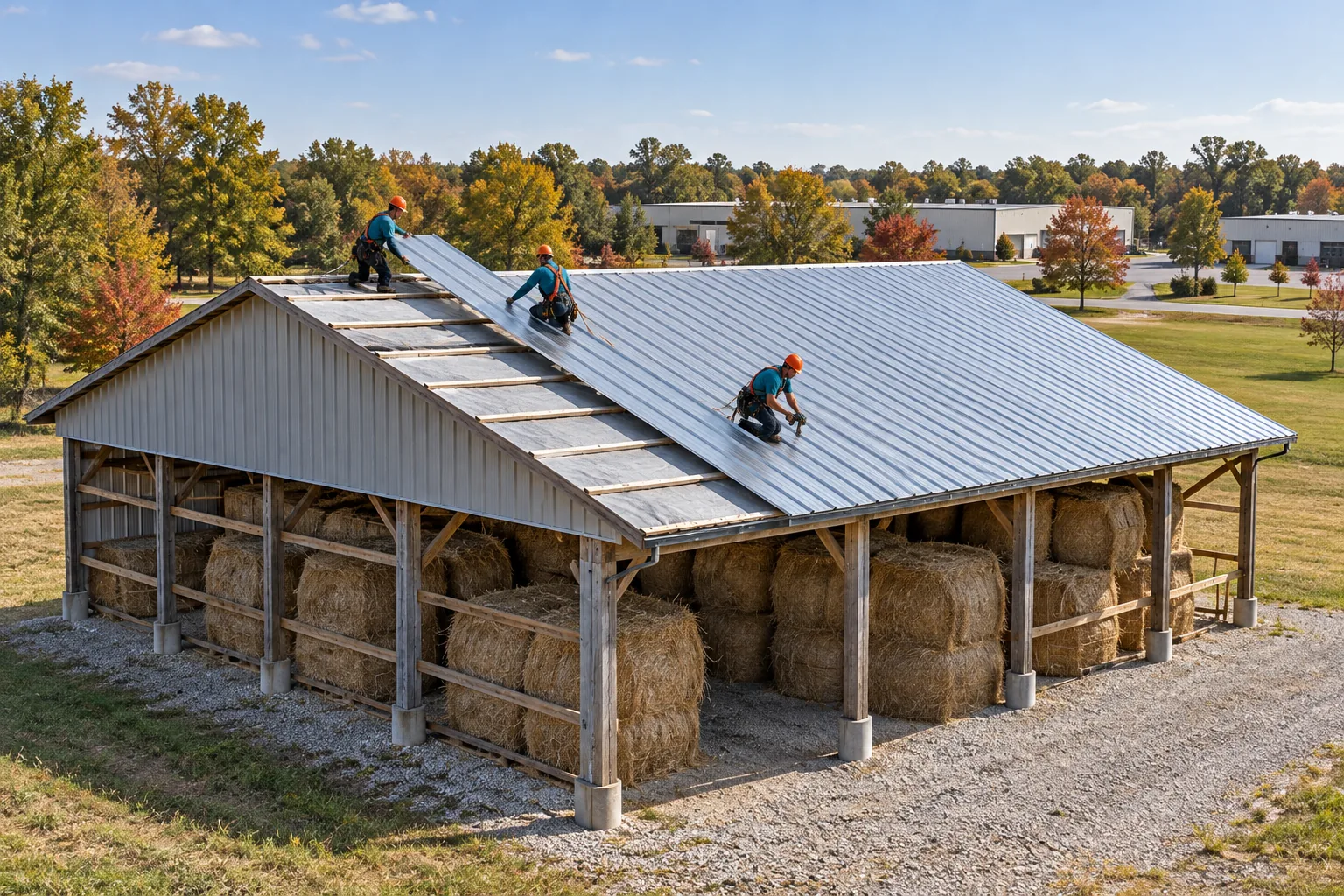
Metal Roofing
Standing seam and R-panel steel in 24 or 26 gauge, plus retrofit framing that builds new pitch over a flat roof that ponds.
Metal roofing details →Membrane or Metal Commercial Roofing in Jeffersontown?
Slope settles most of the choice, since membranes cover low-slope roofs and metal panels need more pitch. Here is how the two families compare.
Single-Ply Membrane
- Roof slope
- Low-slope and flat roofs
- Seams
- Hot-air welded or taped laps
- Best on
- Roofs crowded with curbs and units
- Surface
- White TPO reflects summer sun
- Upkeep
- Seam checks at units and drains
Metal Panel
- Roof slope
- More pitch, or retrofit framing
- Seams
- Locked seams or exposed screws
- Best on
- Shops, plants, steel frames
- Surface
- Light finishes with rated reflectance
- Upkeep
- Screws and washers on R-panel
Repair, Recover, or Tear Off
Replacement makes sense when problems spread across the roof. This table matches what an inspection finds to the work it usually leads to.
| What the inspection finds | Usual next step | Why |
|---|---|---|
| A few open seams | Repair | The membrane around them still holds |
| Wet insulation in one corner | Repair | The wet boards are cut out and replaced |
| Dry insulation, one existing roof | Recover | A cover board and new membrane go over it |
| Wet insulation across many sections | Tear-off | Wet boards come out before any new roof |
| Membrane shrinking at the edges | Replacement | Shrinkage pulls at every wall and curb |
| Rusted steel deck in several bays | Tear-off | Deck repair needs the roof open |
| A recover layer already in place | Tear-off | The building code limits a second recover |
Roof Wet Across Several Bays?
An evening infrared scan and core cuts show how far the water has spread. Ask for an inspection before anyone prices a tear-off.
From Core Cuts to a Closed Roof
The replacement order for any of the six systems, one stage at a time.
Inspect Your Roof
Before any price, the roof gets walked edge to edge. Evening infrared shows warm, wet insulation, and core cuts down to the deck confirm the layer count, board type, thickness, and moisture.
Choose the System
Slope, deck type, rooftop traffic, and what sits under the roof point to TPO, EPDM, a rebuilt flat assembly, or metal panels. Grease exhaust and planned equipment changes weigh in too.
Plan Curbs and Edges
Added insulation raises the roof surface, so curbs, parapet flashing, and coping heights get checked before tear-off. Rooftop unit disconnects go on the mechanical trade's calendar.
Build in Daily Sections
Old layers come off only where the crew can dry in by evening. Insulation, cover board, and the new membrane or panels follow in order, section by section.
Close Out the Roof
Flashings, edge metal, walkway pads, and a final seam check finish the job, and the roof file collects core results, product data, and the permit number.
Commercial Roofing Replacement Questions From Jeffersontown Owners
Answers to the replacement questions owners bring to almost every roof walk.
Most Asked
Which roof systems are common on commercial buildings around Jeffersontown?
Single-ply membranes cover most low-slope buildings here: white TPO on warehouses, offices, and retail, and black EPDM on older flat roofs and additions. Shops, plants, and farm buildings often carry steel panels, and older offices and strip centers can still have built-up or modified bitumen roofs under gravel or a cap sheet.
How do I choose between TPO, EPDM and metal for my building?
Start with slope: membranes cover low-slope roofs, metal panels need more pitch, and the building code and each maker's instructions set the minimums. Then weigh use. A flat roof crowded with units points to TPO or EPDM, a pitched steel frame to standing seam or R-panel, and heavy cooling loads to white TPO or a light metal finish.
Can a commercial roof replacement qualify for a Section 179 deduction?
It can. IRS Publication 946 lists roofs on existing nonresidential buildings as qualified real property, next to HVAC, fire protection, and security systems. The 2026 maximum is $2,560,000, with phase-out above $4,090,000 in qualifying purchases. Residential rental property is excluded, and a CPA decides how your replacement is treated.
When is it time to replace a commercial roof instead of repairing it?
Once the problems spread across the roof. Wet insulation over large areas, seams failing in many places, and a membrane that cracks when folded point to replacement, while a few open seams or one wet corner point to repair. A moisture survey and core cuts show the reach first.
What separates a tear-off from a roof recover on cost?
A tear-off removes every layer down to the deck, so it brings a large dumpster, more haul-off, and more interruption inside. A recover puts a new roof over a dry existing one and hauls far less. The code rules out recovers over wet or badly deteriorated roofs and over roofs that already carry a recover layer.
What does an infrared moisture survey show before a reroof?
Wet insulation holds daytime heat, so an evening infrared scan shows it as warmer patches than the dry roof around it. Core cuts then confirm each patch: the number of layers, the insulation type and thickness, its moisture, and the deck below. Every core is patched before the crew leaves.
What happens to edge metal and parapet flashing in a replacement?
They are usually replaced with the membrane, because the new surface sits at a different height and old metal often has loose cleats. Gravel stops become cleated edge metal, coping is reset, counterflashing is cut into masonry, and gutters are resized. New edge metal follows a tested wind design that the code references.
How are rooftop unit curbs handled during roof replacement?
Units run as long as possible, then a licensed mechanical trade disconnects, lifts, and resets them when the crew reaches their curbs. Curbs left too short by added insulation get an extension or adapter, abandoned curbs come out and get decked over, and a unit being replaced gets its new curb before the membrane.
Book Commercial Roofing Services in Jeffersontown
Call or ask for an estimate, and tell us which roof system the building has now. The inspection starts from there.